Institutional
Instituto Telemar (the Telemar Institute) renamed Oi Futuro
Responsible for the social actions of the largest private company in the country and for the Cultural Center in Rio de Janeiro, the Institute has adopted the Oi brand. Now it is called OI FUTURO, a natural convergence of innovation and daring.
The brand has changed but not its reasons for existence. OI FUTURO will continue to work in two areas: culture and education. “Allying advanced technology with education and culture makes access to knowledge in our country more democratic. Our proposal is to continue to promote digital inclusion programs through the institute. This involves offering the most to those who have the least. As simple as that”, explains Luiz Eduardo Falco, president of the Telemar Group.
The new name reinforces the Institute’s philosophy for the non-profit sector, which is to promote a better future for the children and young people in this country, reducing social distances. It is intended to develop citizenship in young people through the exchange of experiences and the valorization of cultural diversity throughout the country.
Culture and Education
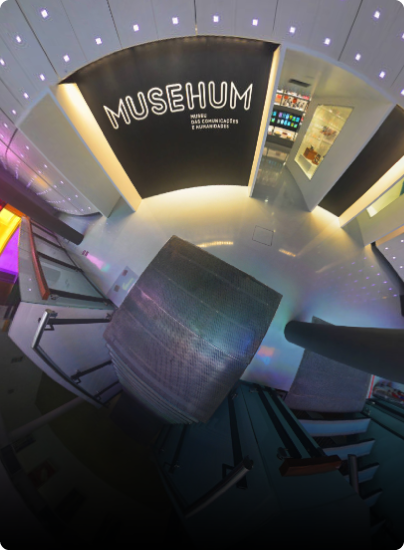
The new brand will not affect the continuity of the Institute’s current or planned programs and projects in culture and education. The Telemar Cultural Center at Rua Dois de Dezembro 63, Flamengo, will now be called OI FUTURO. Nevertheless, the same type of cultural agenda that it has become famous for will be continued: art allied to technology.
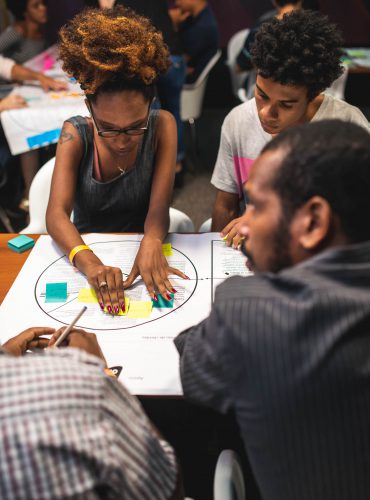
Kabum! Art and Technology classes will now graduate under the Institute’s new brand. This is one of the Institute’s most successful experiences, with schools in Rio, Salvador and Recife. The aim of the project is to allow young people with low incomes access to the technological means of image creation and production. In its three units courses are offered in graphic design, computer graphics, video, photography and web design, with advanced equipment and software and a team of experienced educators in the audiovisual labor market.
“We aim to collaborate with the social transformation of the country and we believe that education and culture are the best paths for this. Thinking about the future in Brazil is thinking about education. Thinking about education for the future of Brazil is thinking about OI FUTURO”, says José Augusto da Gama Figueira, Institute president.
The Telemar Education Project (Project Telemar de Educação - PTE) is now called Tonomundo. It was developed in partnership with Escola do Futuro (School of the Future) in the University of São Paulo and was approved by UNESCO in 2001. It is also public policy in Fortaleza and Pernambuco. Its basic aim is to transform the beneficiary schools into irradiating centers of social projects, thereby helping to reduce the isolation and exclusion of low income communities. The project has already benefited 500,000 students and 7,000 teachers during its five years of existence in 437 schools in regions with low Human Development Indices (HDI).
The free broadband project for public schools, Digital Community, is now known as Conecta. At present more than two million students are connected to the world computer network through Velox, the equivalent of the population of a city the size of Fortaleza. In total, 55 agreements have been signed with 2,000 public schools in 14 states.
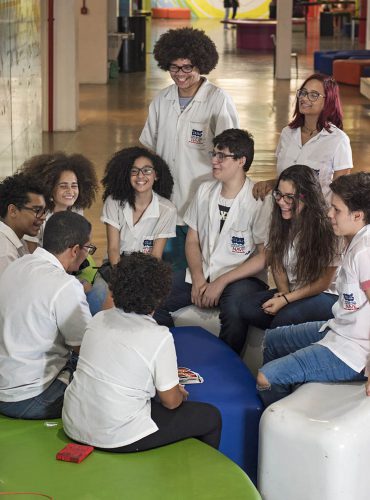
In Recife, the revolutionary teaching experience set up in the Cícero Dias school will now be part of Geração Oi (Oi Generation). One of the institute’s newest educational projects, the school opened at the beginning of the year. It aims to educate multi-functional young people connected with modernity. In this way a new generation of Brazilians will be able to take advantage in secondary schools of advanced technology, exclusive teaching material and innovative methodology, focused on education media and entrepreneurialism.
Finally, there is Novos Brasis (Novos Brasis), a program based on partnerships with NGOs aimed at education and social transformation in areas with low Human Development Indices. The program uses information and communication technologies as a development factor, essentially benefiting children and young people. The aim is to reduce social distances between communities through actions capable of inserting an ever greater number of citizens into the map of citizenship.